JSBSim Flight Dynamics Model  1.1.11 (13 Feb 2022)
An Open Source Flight Dynamics and Control Software Library in C++
Element Class Reference

Detailed Description

Definition at line 143 of file FGXMLElement.h.

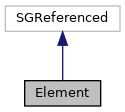
+ Inheritance diagram for Element:
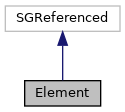
+ Collaboration diagram for Element:

Public Member Functions

 Element (const std::string &nm)
 Constructor. More...
 
 ~Element (void)
 Destructor.
 
void AddAttribute (const std::string &name, const std::string &value)
 Stores an attribute belonging to this element. More...
 
void AddChildElement (Element *el)
 Adds a child element to the list of children stored for this element. More...
 
void AddData (std::string d)
 Stores data belonging to this element. More...
 
void ChangeName (const std::string &_name)
 
double DisperseValue (Element *e, double val, const std::string &supplied_units="", const std::string &target_units="")
 
ElementFindElement (const std::string &el="")
 Searches for a specified element. More...
 
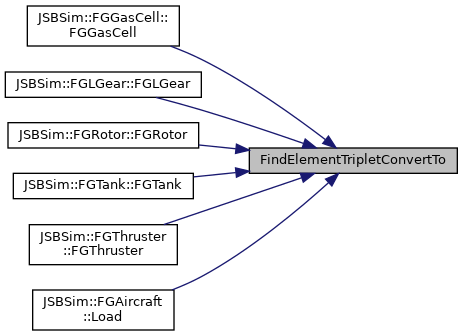
FGColumnVector3 FindElementTripletConvertTo (const std::string &target_units)
 Composes a 3-element column vector for the supplied location or orientation. More...
 
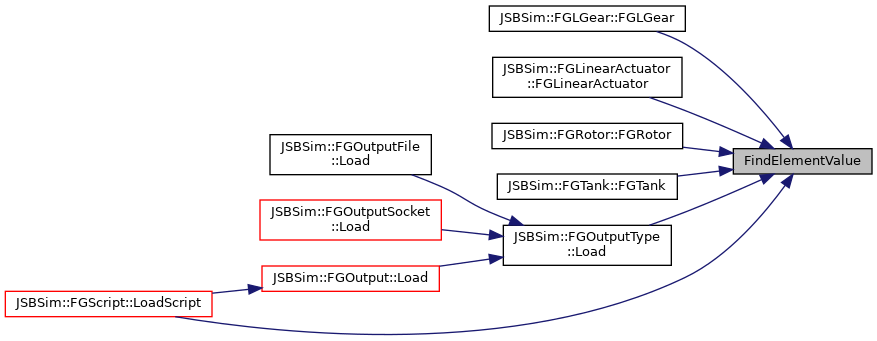
std::string FindElementValue (const std::string &el="")
 Searches for the named element and returns the string data belonging to it. More...
 
bool FindElementValueAsBoolean (const std::string &el="")
 Searches for the named element and returns the data belonging to it as a bool. More...
 
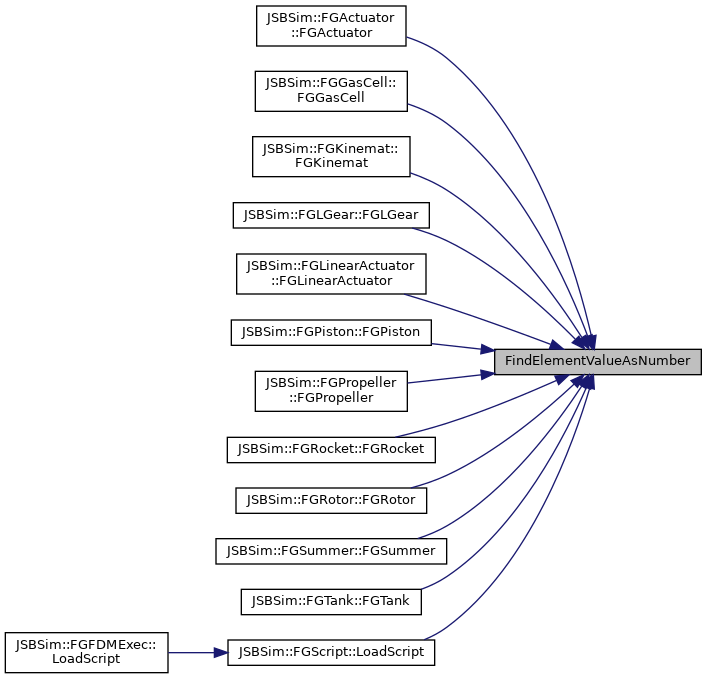
double FindElementValueAsNumber (const std::string &el="")
 Searches for the named element and returns the data belonging to it as a number. More...
 
double FindElementValueAsNumberConvertFromTo (const std::string &el, const std::string &supplied_units, const std::string &target_units)
 Searches for the named element and converts and returns the data belonging to it. More...
 
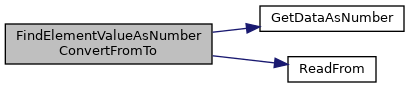
double FindElementValueAsNumberConvertTo (const std::string &el, const std::string &target_units)
 Searches for the named element and converts and returns the data belonging to it. More...
 
ElementFindNextElement (const std::string &el="")
 Searches for the next element as specified. More...
 
std::string GetAttributeValue (const std::string &key)
 Retrieves an attribute. More...
 
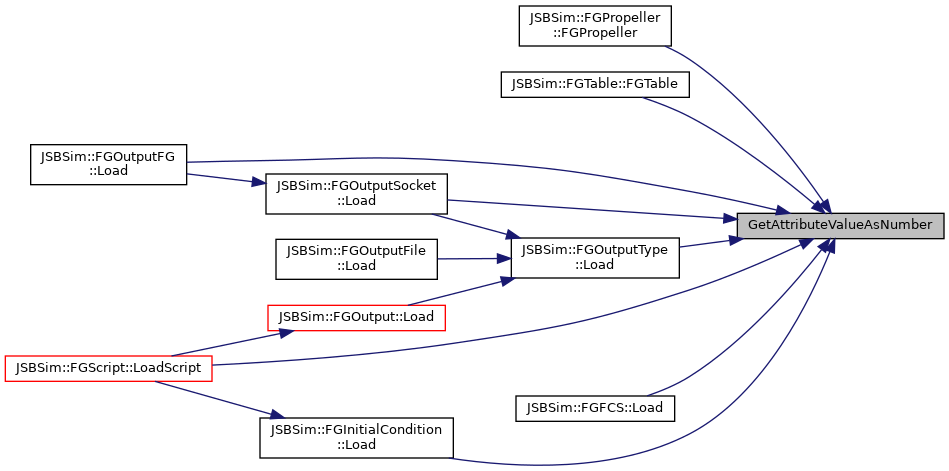
double GetAttributeValueAsNumber (const std::string &key)
 Retrieves an attribute value as a double precision real number. More...
 
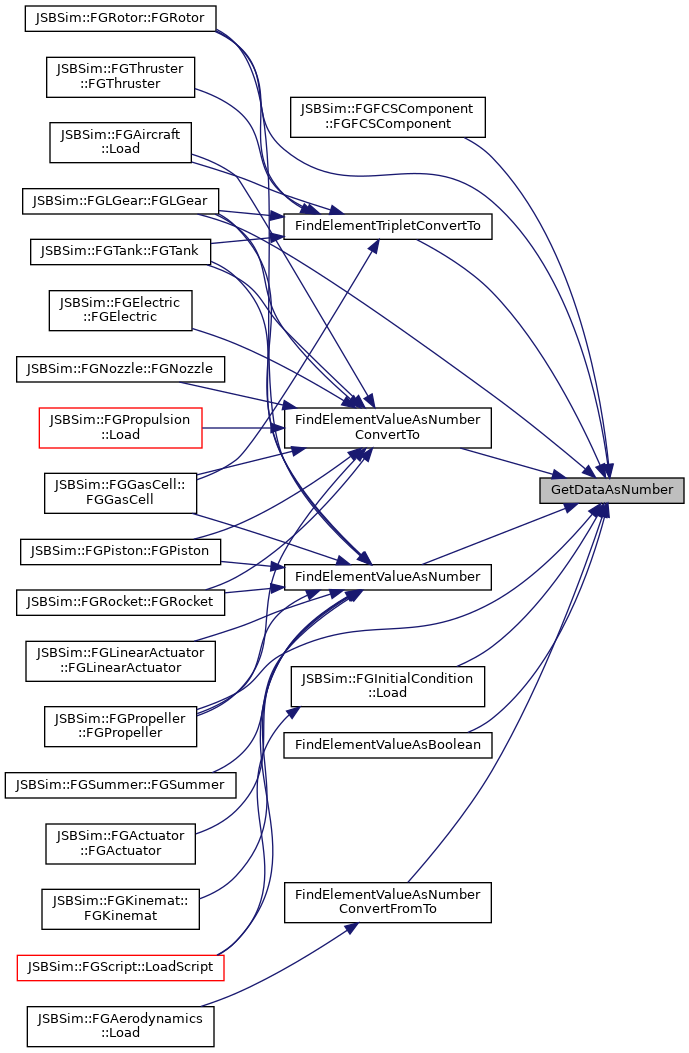
double GetDataAsNumber (void)
 Converts the element data to a number. More...
 
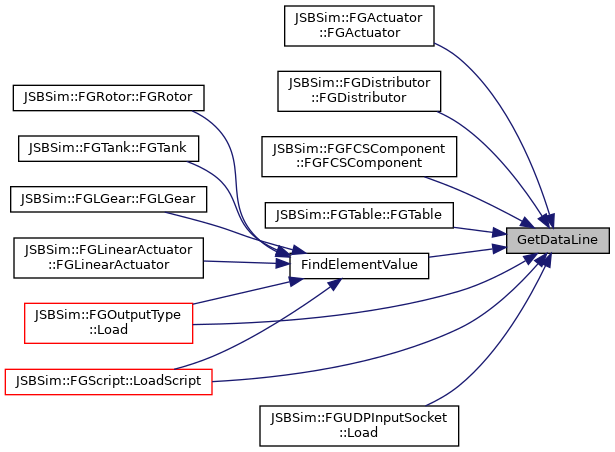
std::string GetDataLine (unsigned int i=0)
 Gets a line of data belonging to an element. More...
 
ElementGetElement (unsigned int el=0)
 Returns a pointer to the element requested by index. More...
 
const std::string & GetFileName (void) const
 Returns the name of the file in which the element has been read. More...
 
int GetLineNumber (void) const
 Returns the line number at which the element has been defined. More...
 
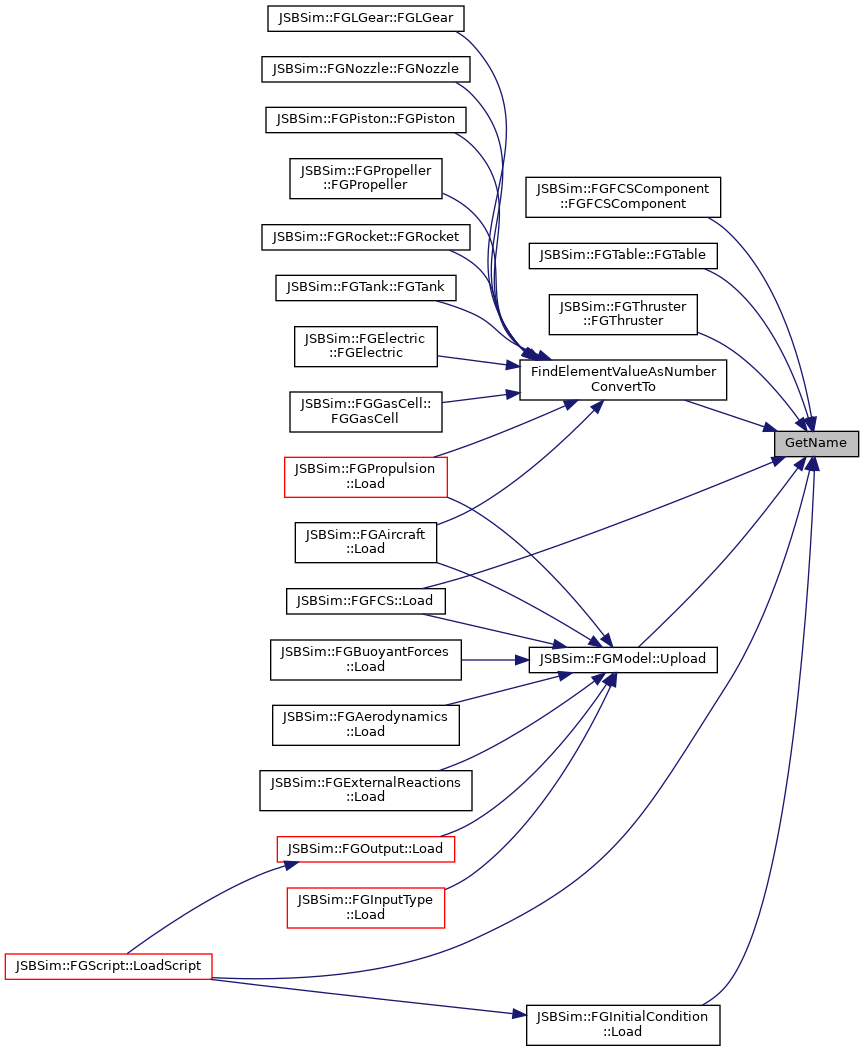
const std::string & GetName (void) const
 Retrieves the element name. More...
 
ElementGetNextElement (void)
 Returns a pointer to the next element in the list. More...
 
unsigned int GetNumDataLines (void)
 Returns the number of lines of data stored.
 
unsigned int GetNumElements (const std::string &element_name)
 Returns the number of named child elements for this element.
 
unsigned int GetNumElements (void)
 Returns the number of child elements for this element.
 
ElementGetParent (void)
 Returns a pointer to the parent of an element. More...
 
bool HasAttribute (const std::string &key)
 Determines if an element has the supplied attribute. More...
 
void MergeAttributes (Element *el)
 Merges the attributes of the current element with another element. More...
 
void Print (unsigned int level=0)
 Prints the element. More...
 
std::string ReadFrom (void) const
 Return a string that contains a description of the location where the current XML element was read from. More...
 
bool SetAttributeValue (const std::string &key, const std::string &value)
 Modifies an attribute. More...
 
void SetFileName (const std::string &name)
 Set the name of the file in which the element has been read. More...
 
void SetLineNumber (int line)
 Set the line number at which the element has been read. More...
 
void SetParent (Element *p)
 This function sets the value of the parent class attribute to the supplied Element pointer. More...
 

Constructor & Destructor Documentation

◆ Element()

Element ( const std::string &  nm)

Constructor.

Parameters
nmthe name of this element (if given)

Definition at line 51 of file FGXMLElement.cpp.

52 {
53  name = nm;
54  parent = 0L;
55  element_index = 0;
56  line_number = -1;
57 
58  if (!converterIsInitialized) {
59  converterIsInitialized = true;
60  // convert ["from"]["to"] = factor, so: from * factor = to
61  // Length
62  convert["M"]["FT"] = 3.2808399;
63  convert["FT"]["M"] = 1.0/convert["M"]["FT"];
64  convert["CM"]["FT"] = 0.032808399;
65  convert["FT"]["CM"] = 1.0/convert["CM"]["FT"];
66  convert["KM"]["FT"] = 3280.8399;
67  convert["FT"]["KM"] = 1.0/convert["KM"]["FT"];
68  convert["FT"]["IN"] = 12.0;
69  convert["IN"]["FT"] = 1.0/convert["FT"]["IN"];
70  convert["IN"]["M"] = convert["IN"]["FT"] * convert["FT"]["M"];
71  convert["M"]["IN"] = convert["M"]["FT"] * convert["FT"]["IN"];
72  // Area
73  convert["M2"]["FT2"] = convert["M"]["FT"]*convert["M"]["FT"];
74  convert["FT2"]["M2"] = 1.0/convert["M2"]["FT2"];
75  convert["CM2"]["FT2"] = convert["CM"]["FT"]*convert["CM"]["FT"];
76  convert["FT2"]["CM2"] = 1.0/convert["CM2"]["FT2"];
77  convert["M2"]["IN2"] = convert["M"]["IN"]*convert["M"]["IN"];
78  convert["IN2"]["M2"] = 1.0/convert["M2"]["IN2"];
79  convert["FT2"]["IN2"] = 144.0;
80  convert["IN2"]["FT2"] = 1.0/convert["FT2"]["IN2"];
81  // Volume
82  convert["IN3"]["CC"] = 16.387064;
83  convert["CC"]["IN3"] = 1.0/convert["IN3"]["CC"];
84  convert["FT3"]["IN3"] = 1728.0;
85  convert["IN3"]["FT3"] = 1.0/convert["FT3"]["IN3"];
86  convert["M3"]["FT3"] = 35.3146667;
87  convert["FT3"]["M3"] = 1.0/convert["M3"]["FT3"];
88  convert["LTR"]["IN3"] = 61.0237441;
89  convert["IN3"]["LTR"] = 1.0/convert["LTR"]["IN3"];
90  convert["GAL"]["FT3"] = 0.133681;
91  convert["FT3"]["GAL"] = 1.0/convert["GAL"]["FT3"];
92  convert["IN3"]["GAL"] = convert["IN3"]["FT3"]*convert["FT3"]["GAL"];
93  convert["LTR"]["GAL"] = convert["LTR"]["IN3"]*convert["IN3"]["GAL"];
94  convert["M3"]["GAL"] = 1000.*convert["LTR"]["GAL"];
95  convert["CC"]["GAL"] = convert["CC"]["IN3"]*convert["IN3"]["GAL"];
96  // Mass & Weight
97  convert["LBS"]["KG"] = 0.45359237;
98  convert["KG"]["LBS"] = 1.0/convert["LBS"]["KG"];
99  convert["SLUG"]["KG"] = 14.59390;
100  convert["KG"]["SLUG"] = 1.0/convert["SLUG"]["KG"];
101  // Moments of Inertia
102  convert["SLUG*FT2"]["KG*M2"] = 1.35594;
103  convert["KG*M2"]["SLUG*FT2"] = 1.0/convert["SLUG*FT2"]["KG*M2"];
104  // Angles
105  convert["RAD"]["DEG"] = 180.0/M_PI;
106  convert["DEG"]["RAD"] = 1.0/convert["RAD"]["DEG"];
107  // Angular rates
108  convert["RAD/SEC"]["DEG/SEC"] = convert["RAD"]["DEG"];
109  convert["DEG/SEC"]["RAD/SEC"] = 1.0/convert["RAD/SEC"]["DEG/SEC"];
110  // Spring force
111  convert["LBS/FT"]["N/M"] = 14.5939;
112  convert["N/M"]["LBS/FT"] = 1.0/convert["LBS/FT"]["N/M"];
113  // Damping force
114  convert["LBS/FT/SEC"]["N/M/SEC"] = 14.5939;
115  convert["N/M/SEC"]["LBS/FT/SEC"] = 1.0/convert["LBS/FT/SEC"]["N/M/SEC"];
116  // Damping force (Square Law)
117  convert["LBS/FT2/SEC2"]["N/M2/SEC2"] = 47.880259;
118  convert["N/M2/SEC2"]["LBS/FT2/SEC2"] = 1.0/convert["LBS/FT2/SEC2"]["N/M2/SEC2"];
119  // Power
120  convert["WATTS"]["HP"] = 0.001341022;
121  convert["HP"]["WATTS"] = 1.0/convert["WATTS"]["HP"];
122  // Force
123  convert["N"]["LBS"] = 0.22482;
124  convert["LBS"]["N"] = 1.0/convert["N"]["LBS"];
125  // Velocity
126  convert["KTS"]["FT/SEC"] = 1.68781;
127  convert["FT/SEC"]["KTS"] = 1.0/convert["KTS"]["FT/SEC"];
128  convert["M/S"]["FT/S"] = 3.2808399;
129  convert["M/S"]["KTS"] = convert["M/S"]["FT/S"]/convert["KTS"]["FT/SEC"];
130  convert["M/SEC"]["FT/SEC"] = 3.2808399;
131  convert["FT/S"]["M/S"] = 1.0/convert["M/S"]["FT/S"];
132  convert["M/SEC"]["FT/SEC"] = 3.2808399;
133  convert["FT/SEC"]["M/SEC"] = 1.0/convert["M/SEC"]["FT/SEC"];
134  convert["KM/SEC"]["FT/SEC"] = 3280.8399;
135  convert["FT/SEC"]["KM/SEC"] = 1.0/convert["KM/SEC"]["FT/SEC"];
136  // Torque
137  convert["FT*LBS"]["N*M"] = 1.35581795;
138  convert["N*M"]["FT*LBS"] = 1/convert["FT*LBS"]["N*M"];
139  // Valve
140  convert["M4*SEC/KG"]["FT4*SEC/SLUG"] = convert["M"]["FT"]*convert["M"]["FT"]*
141  convert["M"]["FT"]*convert["M"]["FT"]/convert["KG"]["SLUG"];
142  convert["FT4*SEC/SLUG"]["M4*SEC/KG"] =
143  1.0/convert["M4*SEC/KG"]["FT4*SEC/SLUG"];
144  // Pressure
145  convert["INHG"]["PSF"] = 70.7180803;
146  convert["PSF"]["INHG"] = 1.0/convert["INHG"]["PSF"];
147  convert["ATM"]["INHG"] = 29.9246899;
148  convert["INHG"]["ATM"] = 1.0/convert["ATM"]["INHG"];
149  convert["PSI"]["INHG"] = 2.03625437;
150  convert["INHG"]["PSI"] = 1.0/convert["PSI"]["INHG"];
151  convert["INHG"]["PA"] = 3386.0; // inches Mercury to pascals
152  convert["PA"]["INHG"] = 1.0/convert["INHG"]["PA"];
153  convert["LBS/FT2"]["N/M2"] = 14.5939/convert["FT"]["M"];
154  convert["N/M2"]["LBS/FT2"] = 1.0/convert["LBS/FT2"]["N/M2"];
155  convert["LBS/FT2"]["PA"] = convert["LBS/FT2"]["N/M2"];
156  convert["PA"]["LBS/FT2"] = 1.0/convert["LBS/FT2"]["PA"];
157  // Mass flow
158  convert["KG/MIN"]["LBS/MIN"] = convert["KG"]["LBS"];
159  convert["KG/SEC"]["LBS/SEC"] = convert["KG"]["LBS"];
160  convert ["N/SEC"]["LBS/SEC"] = 0.224808943;
161  convert ["LBS/SEC"]["N/SEC"] = 1.0/convert ["N/SEC"]["LBS/SEC"];
162  // Fuel Consumption
163  convert["LBS/HP*HR"]["KG/KW*HR"] = 0.6083;
164  convert["KG/KW*HR"]["LBS/HP*HR"] = 1.0/convert["LBS/HP*HR"]["KG/KW*HR"];
165  // Density
166  convert["KG/L"]["LBS/GAL"] = 8.3454045;
167  convert["LBS/GAL"]["KG/L"] = 1.0/convert["KG/L"]["LBS/GAL"];
168  // Gravitational
169  convert["FT3/SEC2"]["M3/SEC2"] = convert["FT3"]["M3"];
170  convert["M3/SEC2"]["FT3/SEC2"] = convert["M3"]["FT3"];
171 
172  // Length
173  convert["M"]["M"] = 1.00;
174  convert["KM"]["KM"] = 1.00;
175  convert["FT"]["FT"] = 1.00;
176  convert["IN"]["IN"] = 1.00;
177  // Area
178  convert["M2"]["M2"] = 1.00;
179  convert["FT2"]["FT2"] = 1.00;
180  // Volume
181  convert["IN3"]["IN3"] = 1.00;
182  convert["CC"]["CC"] = 1.0;
183  convert["M3"]["M3"] = 1.0;
184  convert["FT3"]["FT3"] = 1.0;
185  convert["LTR"]["LTR"] = 1.0;
186  convert["GAL"]["GAL"] = 1.0;
187  // Mass & Weight
188  convert["KG"]["KG"] = 1.00;
189  convert["LBS"]["LBS"] = 1.00;
190  // Moments of Inertia
191  convert["KG*M2"]["KG*M2"] = 1.00;
192  convert["SLUG*FT2"]["SLUG*FT2"] = 1.00;
193  // Angles
194  convert["DEG"]["DEG"] = 1.00;
195  convert["RAD"]["RAD"] = 1.00;
196  // Angular rates
197  convert["DEG/SEC"]["DEG/SEC"] = 1.00;
198  convert["RAD/SEC"]["RAD/SEC"] = 1.00;
199  // Spring force
200  convert["LBS/FT"]["LBS/FT"] = 1.00;
201  convert["N/M"]["N/M"] = 1.00;
202  // Damping force
203  convert["LBS/FT/SEC"]["LBS/FT/SEC"] = 1.00;
204  convert["N/M/SEC"]["N/M/SEC"] = 1.00;
205  // Damping force (Square law)
206  convert["LBS/FT2/SEC2"]["LBS/FT2/SEC2"] = 1.00;
207  convert["N/M2/SEC2"]["N/M2/SEC2"] = 1.00;
208  // Power
209  convert["HP"]["HP"] = 1.00;
210  convert["WATTS"]["WATTS"] = 1.00;
211  // Force
212  convert["N"]["N"] = 1.00;
213  // Velocity
214  convert["FT/SEC"]["FT/SEC"] = 1.00;
215  convert["KTS"]["KTS"] = 1.00;
216  convert["M/S"]["M/S"] = 1.0;
217  convert["M/SEC"]["M/SEC"] = 1.0;
218  convert["KM/SEC"]["KM/SEC"] = 1.0;
219  // Torque
220  convert["FT*LBS"]["FT*LBS"] = 1.00;
221  convert["N*M"]["N*M"] = 1.00;
222  // Valve
223  convert["M4*SEC/KG"]["M4*SEC/KG"] = 1.0;
224  convert["FT4*SEC/SLUG"]["FT4*SEC/SLUG"] = 1.0;
225  // Pressure
226  convert["PSI"]["PSI"] = 1.00;
227  convert["PSF"]["PSF"] = 1.00;
228  convert["INHG"]["INHG"] = 1.00;
229  convert["ATM"]["ATM"] = 1.0;
230  convert["PA"]["PA"] = 1.0;
231  convert["N/M2"]["N/M2"] = 1.00;
232  convert["LBS/FT2"]["LBS/FT2"] = 1.00;
233  // Mass flow
234  convert["LBS/SEC"]["LBS/SEC"] = 1.00;
235  convert["KG/MIN"]["KG/MIN"] = 1.0;
236  convert["LBS/MIN"]["LBS/MIN"] = 1.0;
237  convert["N/SEC"]["N/SEC"] = 1.0;
238  // Fuel Consumption
239  convert["LBS/HP*HR"]["LBS/HP*HR"] = 1.0;
240  convert["KG/KW*HR"]["KG/KW*HR"] = 1.0;
241  // Density
242  convert["KG/L"]["KG/L"] = 1.0;
243  convert["LBS/GAL"]["LBS/GAL"] = 1.0;
244  // Gravitational
245  convert["FT3/SEC2"]["FT3/SEC2"] = 1.0;
246  convert["M3/SEC2"]["M3/SEC2"] = 1.0;
247  }
248 }

Member Function Documentation

◆ AddAttribute()

void AddAttribute ( const std::string &  name,
const std::string &  value 
)

Stores an attribute belonging to this element.

Parameters
nameThe string name of the attribute.
valueThe string value of the attribute.

Definition at line 720 of file FGXMLElement.cpp.

721 {
722  attributes[name] = value;
723 }
+ Here is the caller graph for this function:

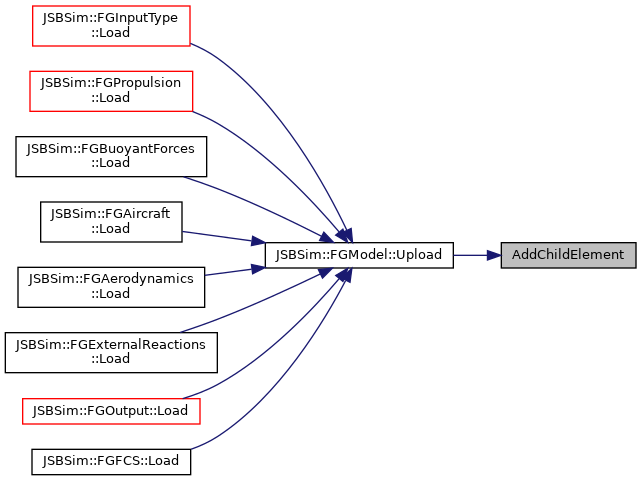
◆ AddChildElement()

void AddChildElement ( Element el)
inline

Adds a child element to the list of children stored for this element.

Parameters
elChild element to add.

Definition at line 345 of file FGXMLElement.h.

345 {children.push_back(el);}
+ Here is the caller graph for this function:

◆ AddData()

void AddData ( std::string  d)

Stores data belonging to this element.

Parameters
dthe data to store.

Definition at line 727 of file FGXMLElement.cpp.

728 {
729  string::size_type string_start = d.find_first_not_of(" \t");
730  if (string_start != string::npos && string_start > 0) {
731  d.erase(0,string_start);
732  }
733  data_lines.push_back(d);
734 }

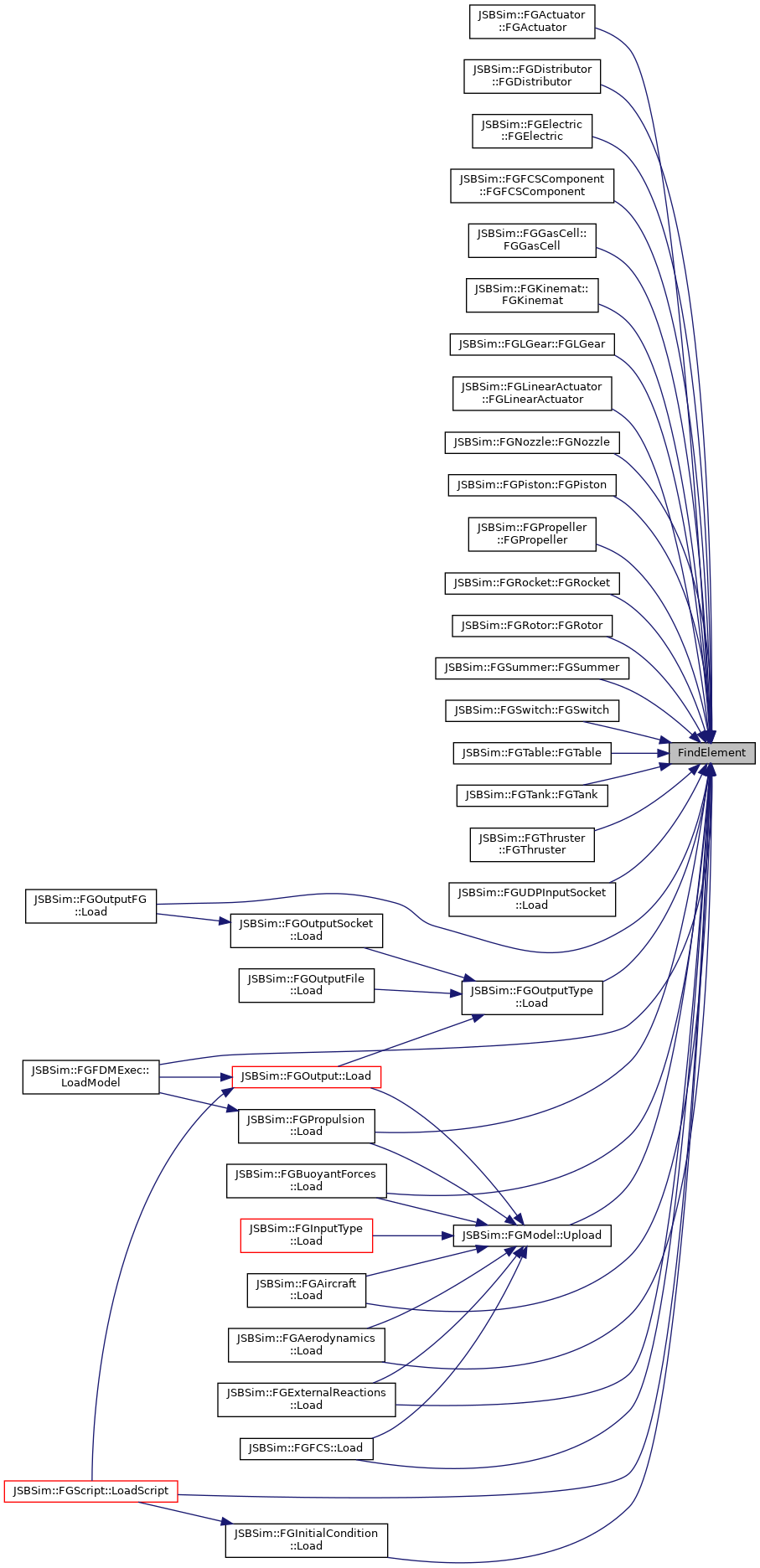
◆ FindElement()

Element * FindElement ( const std::string &  el = "")

Searches for a specified element.

Finds the first element that matches the supplied string, or simply the first element if no search string is supplied. This function call resets the internal element counter to the first element.

Parameters
elthe search string (empty string by default).
Returns
a pointer to the first element that matches the supplied search string.

Definition at line 389 of file FGXMLElement.cpp.

390 {
391  if (el.empty() && children.size() >= 1) {
392  element_index = 1;
393  return children[0];
394  }
395  for (unsigned int i=0; i<children.size(); i++) {
396  if (el == children[i]->GetName()) {
397  element_index = i+1;
398  return children[i];
399  }
400  }
401  element_index = 0;
402  return 0L;
403 }
+ Here is the caller graph for this function:

◆ FindElementTripletConvertTo()

FGColumnVector3 FindElementTripletConvertTo ( const std::string &  target_units)

Composes a 3-element column vector for the supplied location or orientation.

This function processes a LOCATION or ORIENTATION construct, returning a filled-out 3-element column vector containing the X, Y, Z or ROLL, PITCH, YAW elements found in the supplied element. If one of the mentioned components is not found, that component is set to zero and a warning message is printed. All three elements should be supplied.

Parameters
target_unitsthe string representing the native units used by JSBSim to which the value returned will be converted.
Returns
a column vector object built from the LOCATION or ORIENT components.

Definition at line 589 of file FGXMLElement.cpp.

590 {
591  FGColumnVector3 triplet;
592  Element* item;
593  double value=0.0;
594  string supplied_units = GetAttributeValue("unit");
595 
596  if (!supplied_units.empty()) {
597  if (convert.find(supplied_units) == convert.end()) {
598  std::stringstream s;
599  s << ReadFrom() << "Supplied unit: \"" << supplied_units
600  << "\" does not exist (typo?).";
601  cerr << s.str() << endl;
602  throw invalid_argument(s.str());
603  }
604  if (convert[supplied_units].find(target_units) == convert[supplied_units].end()) {
605  std::stringstream s;
606  s << ReadFrom() << "Supplied unit: \"" << supplied_units
607  << "\" cannot be converted to " << target_units;
608  cerr << s.str() << endl;
609  throw invalid_argument(s.str());
610  }
611  }
612 
613  item = FindElement("x");
614  if (!item) item = FindElement("roll");
615  if (item) {
616  value = item->GetDataAsNumber();
617  if (!supplied_units.empty()) value *= convert[supplied_units][target_units];
618  triplet(1) = DisperseValue(item, value, supplied_units, target_units);
619  } else {
620  triplet(1) = 0.0;
621  }
622 
623 
624  item = FindElement("y");
625  if (!item) item = FindElement("pitch");
626  if (item) {
627  value = item->GetDataAsNumber();
628  if (!supplied_units.empty()) value *= convert[supplied_units][target_units];
629  triplet(2) = DisperseValue(item, value, supplied_units, target_units);
630  } else {
631  triplet(2) = 0.0;
632  }
633 
634  item = FindElement("z");
635  if (!item) item = FindElement("yaw");
636  if (item) {
637  value = item->GetDataAsNumber();
638  if (!supplied_units.empty()) value *= convert[supplied_units][target_units];
639  triplet(3) = DisperseValue(item, value, supplied_units, target_units);
640  } else {
641  triplet(3) = 0.0;
642  }
643 
644  return triplet;
645 }
+ Here is the call graph for this function:
+ Here is the caller graph for this function:

◆ FindElementValue()

string FindElementValue ( const std::string &  el = "")

Searches for the named element and returns the string data belonging to it.

This function allows the data belonging to a named element to be returned as a string. If no element is found, the empty string is returned. If no argument is supplied, the data string for the first element is returned.

Parameters
elthe name of the element being searched for (the empty string by default)
Returns
the data value for the named element as a string, or the empty string if the element cannot be found.

Definition at line 468 of file FGXMLElement.cpp.

469 {
470  Element* element = FindElement(el);
471  if (element) {
472  return element->GetDataLine();
473  } else {
474  return "";
475  }
476 }
+ Here is the call graph for this function:
+ Here is the caller graph for this function:

◆ FindElementValueAsBoolean()

bool FindElementValueAsBoolean ( const std::string &  el = "")

Searches for the named element and returns the data belonging to it as a bool.

This function allows the data belonging to a named element to be returned as a bool. If no element is found, false is returned. If no argument is supplied, the data for the first element is returned.

Parameters
elthe name of the element being searched for (the empty string by default)
Returns
the data value for the named element as a bool, or false if the data is missing. Zero will be false, while any other number will be true.

Definition at line 446 of file FGXMLElement.cpp.

447 {
448  Element* element = FindElement(el);
449  if (element) {
450  // check value as an ordinary number
451  double value = element->GetDataAsNumber();
452 
453  // now check how it should return data
454  if (value == 0) {
455  return false;
456  } else {
457  return true;
458  }
459  } else {
460  cerr << ReadFrom() << "Attempting to get non-existent element " << el << " ;returning false"
461  << endl;
462  return false;
463  }
464 }
+ Here is the call graph for this function:

◆ FindElementValueAsNumber()

double FindElementValueAsNumber ( const std::string &  el = "")

Searches for the named element and returns the data belonging to it as a number.

This function allows the data belonging to a named element to be returned as a double. If no element is found, HUGE_VAL is returned. If no argument is supplied, the data for the first element is returned.

Parameters
elthe name of the element being searched for (the empty string by default)
Returns
the data value for the named element as a double, or HUGE_VAL if the data is missing.

Definition at line 429 of file FGXMLElement.cpp.

430 {
431  Element* element = FindElement(el);
432  if (element) {
433  double value = element->GetDataAsNumber();
434  value = DisperseValue(element, value);
435  return value;
436  } else {
437  std::stringstream s;
438  s << ReadFrom() << "Attempting to get non-existent element " << el;
439  cerr << s.str() << endl;
440  throw length_error(s.str());
441  }
442 }
+ Here is the call graph for this function:
+ Here is the caller graph for this function:

◆ FindElementValueAsNumberConvertFromTo()

double FindElementValueAsNumberConvertFromTo ( const std::string &  el,
const std::string &  supplied_units,
const std::string &  target_units 
)

Searches for the named element and converts and returns the data belonging to it.

This function allows the data belonging to a named element to be returned as a double. If no element is found, HUGE_VAL is returned. If no argument is supplied, the data for the first element is returned. Additionally, this function converts the value from the units specified in the supplied_units parameter to the units specified in the target_units parameter. JSBSim itself, as specified by the target_units parameter. The currently allowable unit conversions are seen in the source file FGXMLElement.cpp. Also, see above in the main documentation for this class.

Parameters
elthe name of the element being searched for (the empty string by default)
supplied_unitsthe string representing the units of the value as supplied by the config file.
target_unitsthe string representing the native units used by JSBSim to which the value returned will be converted.
Returns
the unit-converted data value for the named element as a double, or HUGE_VAL if the data is missing.

Definition at line 547 of file FGXMLElement.cpp.

550 {
551  Element* element = FindElement(el);
552 
553  if (!element) {
554  std::stringstream s;
555  s << ReadFrom() << "Attempting to get non-existent element " << el;
556  cerr << s.str() << endl;
557  throw length_error(s.str());
558  }
559 
560  if (!supplied_units.empty()) {
561  if (convert.find(supplied_units) == convert.end()) {
562  std::stringstream s;
563  s << element->ReadFrom() << "Supplied unit: \"" << supplied_units
564  << "\" does not exist (typo?).";
565  cerr << s.str() << endl;
566  throw invalid_argument(s.str());
567  }
568  if (convert[supplied_units].find(target_units) == convert[supplied_units].end()) {
569  std::stringstream s;
570  s << element->ReadFrom() << "Supplied unit: \"" << supplied_units
571  << "\" cannot be converted to " << target_units;
572  cerr << s.str() << endl;
573  throw invalid_argument(s.str());
574  }
575  }
576 
577  double value = element->GetDataAsNumber();
578  if (!supplied_units.empty()) {
579  value *= convert[supplied_units][target_units];
580  }
581 
582  value = DisperseValue(element, value, supplied_units, target_units);
583 
584  return value;
585 }
+ Here is the call graph for this function:
+ Here is the caller graph for this function:

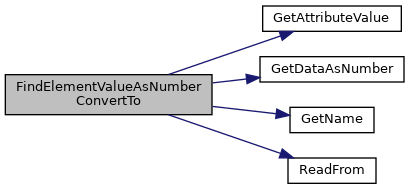
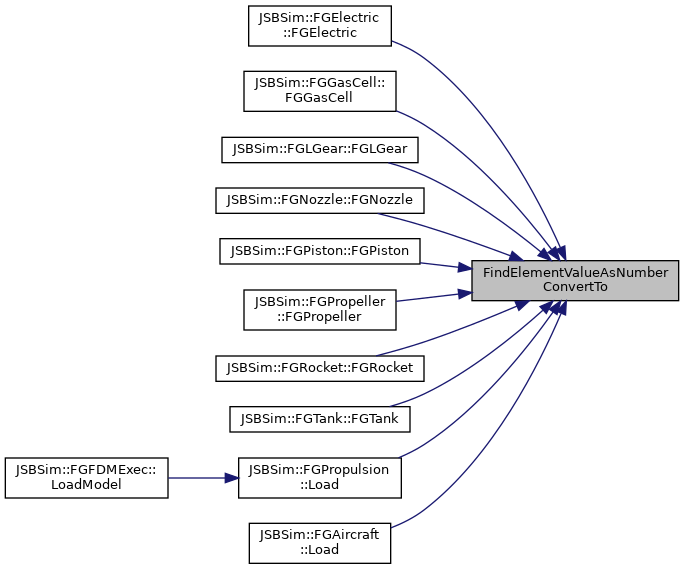
◆ FindElementValueAsNumberConvertTo()

double FindElementValueAsNumberConvertTo ( const std::string &  el,
const std::string &  target_units 
)

Searches for the named element and converts and returns the data belonging to it.

This function allows the data belonging to a named element to be returned as a double. If no element is found, HUGE_VAL is returned. If no argument is supplied, the data for the first element is returned. Additionally, this function converts the value from the units specified in the config file (via the UNITS="" attribute in the element definition) to the native units used by JSBSim itself, as specified by the target_units parameter. The currently allowable unit conversions are seen in the source file FGXMLElement.cpp. Also, see above in the main documentation for this class.

Parameters
elthe name of the element being searched for (the empty string by default)
target_unitsthe string representing the native units used by JSBSim to which the value returned will be converted.
Returns
the unit-converted data value for the named element as a double, or HUGE_VAL if the data is missing.

Definition at line 480 of file FGXMLElement.cpp.

481 {
482  Element* element = FindElement(el);
483 
484  if (!element) {
485  std::stringstream s;
486  s << ReadFrom() << "Attempting to get non-existent element " << el;
487  cerr << s.str() << endl;
488  throw length_error(s.str());
489  }
490 
491  string supplied_units = element->GetAttributeValue("unit");
492 
493  if (!supplied_units.empty()) {
494  if (convert.find(supplied_units) == convert.end()) {
495  std::stringstream s;
496  s << element->ReadFrom() << "Supplied unit: \"" << supplied_units
497  << "\" does not exist (typo?).";
498  cerr << s.str() << endl;
499  throw invalid_argument(s.str());
500  }
501  if (convert[supplied_units].find(target_units) == convert[supplied_units].end()) {
502  std::stringstream s;
503  s << element->ReadFrom() << "Supplied unit: \"" << supplied_units
504  << "\" cannot be converted to " << target_units;
505  cerr << s.str() << endl;
506  throw invalid_argument(s.str());
507  }
508  }
509 
510  double value = element->GetDataAsNumber();
511 
512  // Sanity check for angular values
513  if ((supplied_units == "RAD") && (fabs(value) > 2 * M_PI)) {
514  cerr << element->ReadFrom() << element->GetName() << " value "
515  << value << " RAD is outside the range [ -2*M_PI RAD ; +2*M_PI RAD ]"
516  << endl;
517  }
518  if ((supplied_units == "DEG") && (fabs(value) > 360.0)) {
519  cerr << element->ReadFrom() << element->GetName() << " value "
520  << value << " DEG is outside the range [ -360 DEG ; +360 DEG ]"
521  << endl;
522  }
523 
524 
525  if (!supplied_units.empty()) {
526  value *= convert[supplied_units][target_units];
527  }
528 
529  if ((target_units == "RAD") && (fabs(value) > 2 * M_PI)) {
530  cerr << element->ReadFrom() << element->GetName() << " value "
531  << value << " RAD is outside the range [ -2*M_PI RAD ; +2*M_PI RAD ]"
532  << endl;
533  }
534  if ((target_units == "DEG") && (fabs(value) > 360.0)) {
535  cerr << element->ReadFrom() << element->GetName() << " value "
536  << value << " DEG is outside the range [ -360 DEG ; +360 DEG ]"
537  << endl;
538  }
539 
540  value = DisperseValue(element, value, supplied_units, target_units);
541 
542  return value;
543 }
+ Here is the call graph for this function:
+ Here is the caller graph for this function:

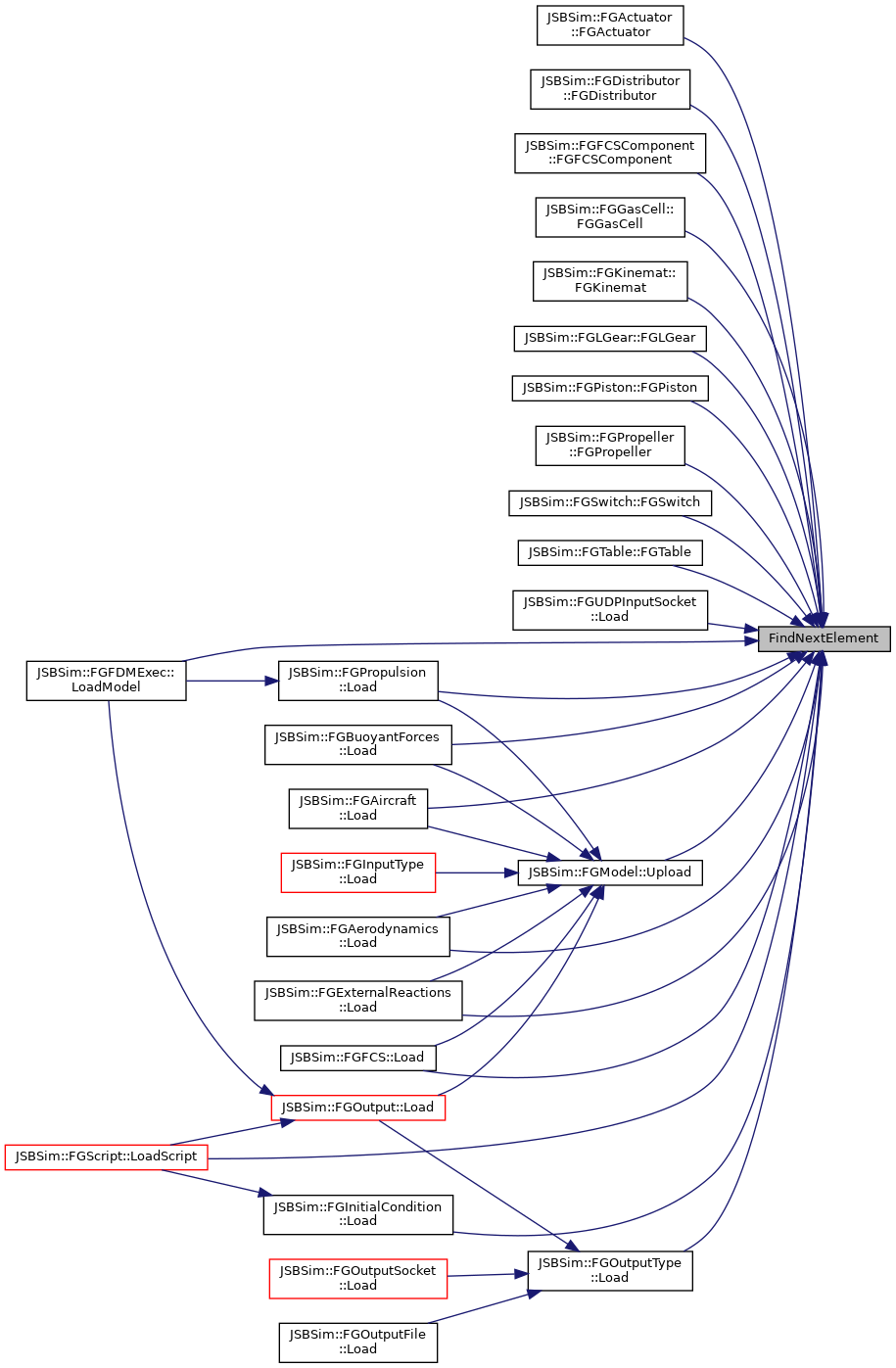
◆ FindNextElement()

Element * FindNextElement ( const std::string &  el = "")

Searches for the next element as specified.

This function would be called after FindElement() is first called (in order to reset the internal counter). If no argument is supplied (or the empty string) a pointer to the very next element is returned. Otherwise, the next occurence of the named element is returned. If the end of the list is reached, 0 is returned.

Parameters
elthe name of the next element to find.
Returns
the pointer to the found element, or 0 if no appropriate element us found.

Definition at line 407 of file FGXMLElement.cpp.

408 {
409  if (el.empty()) {
410  if (element_index < children.size()) {
411  return children[element_index++];
412  } else {
413  element_index = 0;
414  return 0L;
415  }
416  }
417  for (unsigned int i=element_index; i<children.size(); i++) {
418  if (el == children[i]->GetName()) {
419  element_index = i+1;
420  return children[i];
421  }
422  }
423  element_index = 0;
424  return 0L;
425 }
+ Here is the caller graph for this function:

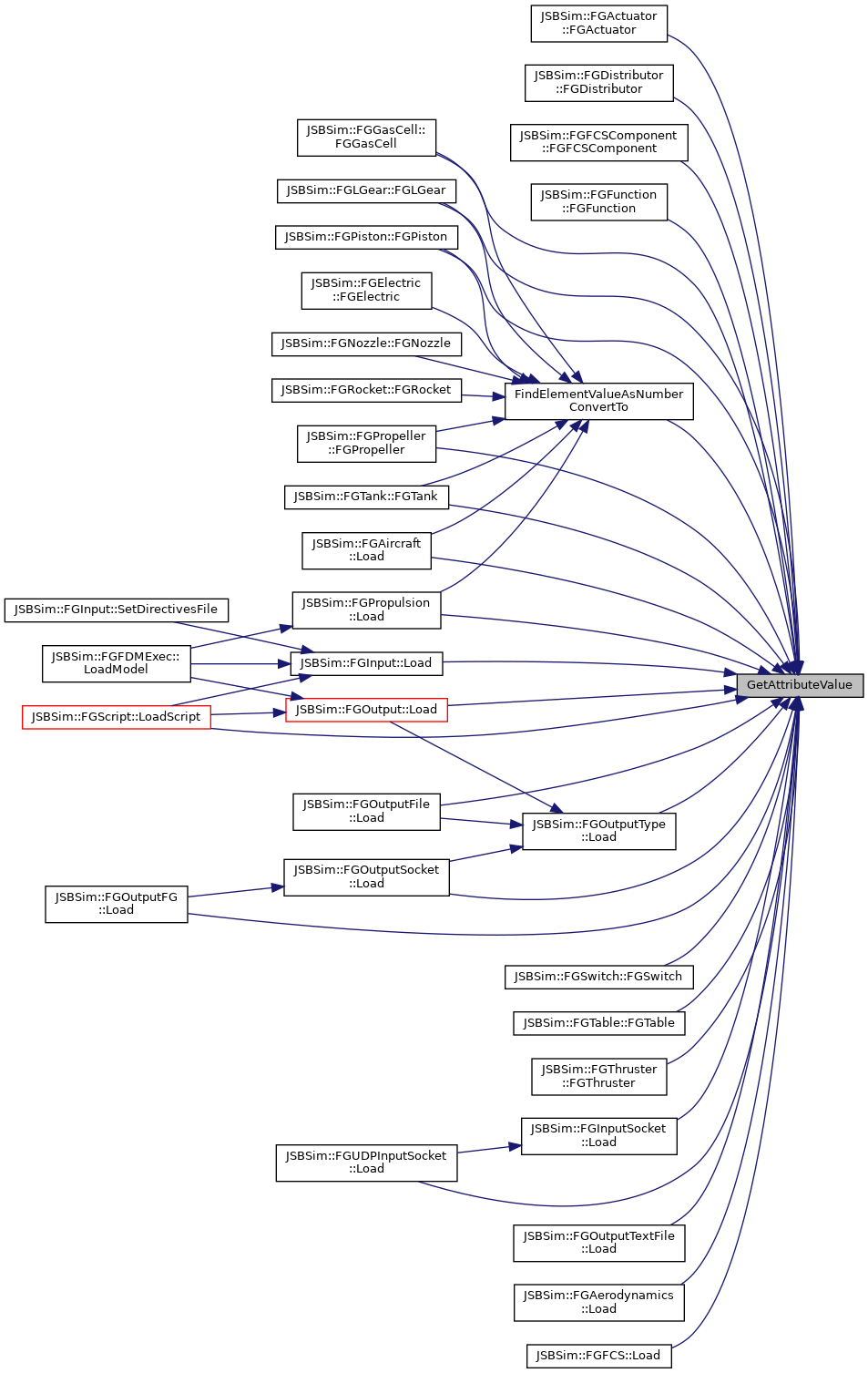
◆ GetAttributeValue()

string GetAttributeValue ( const std::string &  key)

Retrieves an attribute.

Parameters
keyspecifies the attribute key to retrieve the value of.
Returns
the key value (as a string), or the empty string if no such attribute exists.

Definition at line 260 of file FGXMLElement.cpp.

261 {
262  if (HasAttribute(attr)) return attributes[attr];
263  else return ("");
264 }
+ Here is the caller graph for this function:

◆ GetAttributeValueAsNumber()

double GetAttributeValueAsNumber ( const std::string &  key)

Retrieves an attribute value as a double precision real number.

Parameters
keyspecifies the attribute key to retrieve the value of.
Returns
the key value (as a number), or the HUGE_VAL if no such attribute exists.

Definition at line 279 of file FGXMLElement.cpp.

280 {
281  string attribute = GetAttributeValue(attr);
282 
283  if (attribute.empty()) {
284  std::stringstream s;
285  s << ReadFrom() << "Expecting numeric attribute value, but got no data";
286  cerr << s.str() << endl;
287  throw length_error(s.str());
288  }
289  else {
290  double number=0;
291  if (is_number(trim(attribute)))
292  number = atof(attribute.c_str());
293  else {
294  std::stringstream s;
295  s << ReadFrom() << "Expecting numeric attribute value, but got: " << attribute;
296  cerr << s.str() << endl;
297  throw invalid_argument(s.str());
298  }
299 
300  return (number);
301  }
302 }
+ Here is the caller graph for this function:

◆ GetDataAsNumber()

double GetDataAsNumber ( void  )

Converts the element data to a number.

This function attempts to convert the first (and presumably only) line of data "owned" by the element into a real number. If there is not exactly one line of data owned by the element, then HUGE_VAL is returned.

Returns
the numeric value of the data owned by the element.

Definition at line 341 of file FGXMLElement.cpp.

342 {
343  if (data_lines.size() == 1) {
344  double number=0;
345  if (is_number(trim(data_lines[0])))
346  number = atof(data_lines[0].c_str());
347  else {
348  std::stringstream s;
349  s << ReadFrom() << "Expected numeric value, but got: " << data_lines[0];
350  cerr << s.str() << endl;
351  throw invalid_argument(s.str());
352  }
353 
354  return number;
355  } else if (data_lines.size() == 0) {
356  std::stringstream s;
357  s << ReadFrom() << "Expected numeric value, but got no data";
358  cerr << s.str() << endl;
359  throw length_error(s.str());
360  } else {
361  cerr << ReadFrom() << "Attempting to get single data value in element "
362  << "<" << name << ">" << endl
363  << " from multiple lines:" << endl;
364  for(unsigned int i=0; i<data_lines.size(); ++i)
365  cerr << data_lines[i] << endl;
366  std::stringstream s;
367  s << ReadFrom() << "Attempting to get single data value in element "
368  << "<" << name << ">"
369  << " from multiple lines (" << data_lines.size() << ").";
370  throw length_error(s.str());
371  }
372 }
+ Here is the caller graph for this function:

◆ GetDataLine()

string GetDataLine ( unsigned int  i = 0)

Gets a line of data belonging to an element.

Parameters
ithe index of the data line to return (0 by default).
Returns
a string representing the data line requested, or the empty string if none exists.

Definition at line 333 of file FGXMLElement.cpp.

334 {
335  if (data_lines.size() > 0) return data_lines[i];
336  else return string("");
337 }
+ Here is the caller graph for this function:

◆ GetElement()

Element * GetElement ( unsigned int  el = 0)

Returns a pointer to the element requested by index.

This function also resets an internal counter to the index, so that subsequent calls to GetNextElement() will return the following elements sequentially, until the last element is reached. At that point, GetNextElement() will return NULL.

Parameters
elthe index of the requested element (0 by default)
Returns
a pointer to the Element, or 0 if no valid element exists.

Definition at line 306 of file FGXMLElement.cpp.

307 {
308  if (children.size() > el) {
309  element_index = el;
310  return children[el];
311  }
312  else {
313  element_index = 0;
314  return 0L;
315  }
316 }
+ Here is the caller graph for this function:

◆ GetFileName()

const std::string& GetFileName ( void  ) const
inline

Returns the name of the file in which the element has been read.

Returns
the file name

Definition at line 235 of file FGXMLElement.h.

235 { return file_name; }
+ Here is the caller graph for this function:

◆ GetLineNumber()

int GetLineNumber ( void  ) const
inline

Returns the line number at which the element has been defined.

Returns
the line number

Definition at line 230 of file FGXMLElement.h.

230 { return line_number; }
+ Here is the caller graph for this function:

◆ GetName()

const std::string& GetName ( void  ) const
inline

Retrieves the element name.

Returns
the element name, or the empty string if no name has been set.

Definition at line 179 of file FGXMLElement.h.

179 {return name;}
+ Here is the caller graph for this function:

◆ GetNextElement()

Element * GetNextElement ( void  )

Returns a pointer to the next element in the list.

The function GetElement() must be called first to be sure that this function will return the correct element. The call to GetElement() resets the internal counter to zero. Subsequent calls to GetNextElement() return a pointer to subsequent elements in the list. When the final element is reached, 0 is returned.

Returns
a pointer to the next Element in the sequence, or 0 if no valid Element is present.

Definition at line 320 of file FGXMLElement.cpp.

321 {
322  if (children.size() > element_index+1) {
323  element_index++;
324  return children[element_index];
325  } else {
326  element_index = 0;
327  return 0L;
328  }
329 }
+ Here is the caller graph for this function:

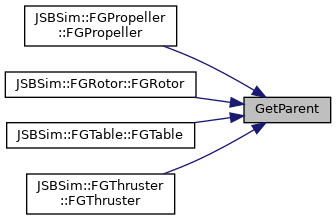
◆ GetParent()

Element* GetParent ( void  )
inline

Returns a pointer to the parent of an element.

Returns
a pointer to the parent Element, or 0 if this is the top level Element.

Definition at line 225 of file FGXMLElement.h.

225 {return parent;}
+ Here is the caller graph for this function:

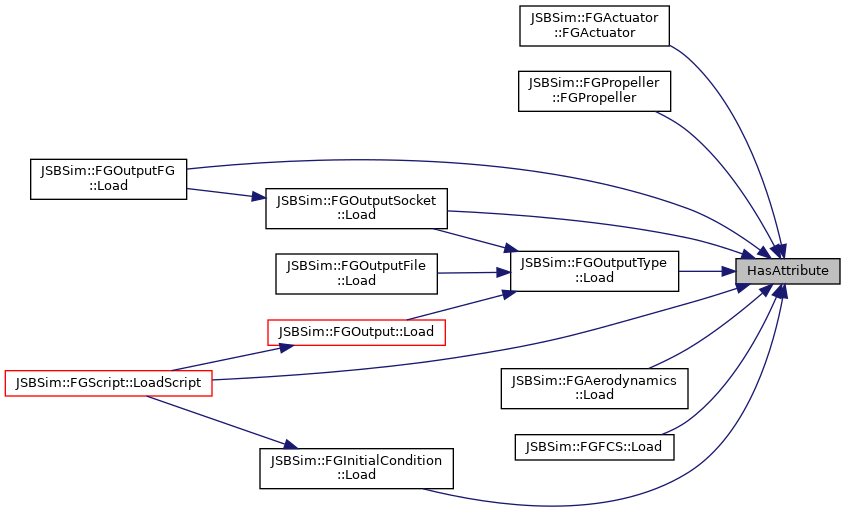
◆ HasAttribute()

bool HasAttribute ( const std::string &  key)
inline

Determines if an element has the supplied attribute.

Parameters
keyspecifies the attribute key to retrieve the value of.
Returns
true or false.

Definition at line 155 of file FGXMLElement.h.

155 {return attributes.find(key) != attributes.end();}
+ Here is the caller graph for this function:

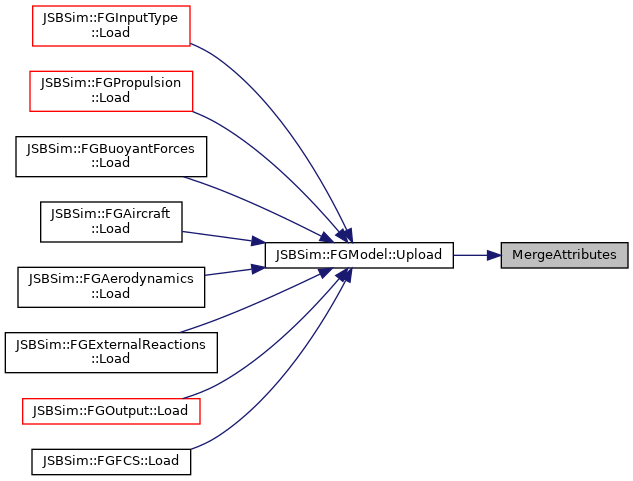
◆ MergeAttributes()

void MergeAttributes ( Element el)

Merges the attributes of the current element with another element.

The attributes from the current element override the element that is passed as a parameter. In other words if the two elements have an attribute with the same name, the attribute from the current element is kept and the corresponding attribute of the other element is ignored.

Parameters
elelement with which the current element will merge its attributes.

Definition at line 751 of file FGXMLElement.cpp.

752 {
753  map<string, string>::iterator it;
754 
755  for (it=el->attributes.begin(); it != el->attributes.end(); ++it) {
756  if (attributes.find(it->first) == attributes.end())
757  attributes[it->first] = it->second;
758  else {
759  if (FGJSBBase::debug_lvl > 0 && (attributes[it->first] != it->second))
760  cout << el->ReadFrom() << " Attribute '" << it->first << "' is overridden in file "
761  << GetFileName() << ": line " << GetLineNumber() << endl
762  << " The value '" << attributes[it->first] << "' will be used instead of '"
763  << it->second << "'." << endl;
764  }
765  }
766 }
+ Here is the call graph for this function:
+ Here is the caller graph for this function:

◆ Print()

void Print ( unsigned int  level = 0)

Prints the element.

Prints this element and calls the Print routine for child elements.

Parameters
dThe tab level. A level corresponds to a single space.

Definition at line 696 of file FGXMLElement.cpp.

697 {
698  unsigned int i, spaces;
699 
700  level+=2;
701  for (spaces=0; spaces<=level; spaces++) cout << " "; // format output
702  cout << "Element Name: " << name;
703 
704  map<string, string>::iterator it;
705  for (it = attributes.begin(); it != attributes.end(); ++it)
706  cout << " " << it->first << " = " << it->second;
707 
708  cout << endl;
709  for (i=0; i<data_lines.size(); i++) {
710  for (spaces=0; spaces<=level; spaces++) cout << " "; // format output
711  cout << data_lines[i] << endl;
712  }
713  for (i=0; i<children.size(); i++) {
714  children[i]->Print(level);
715  }
716 }

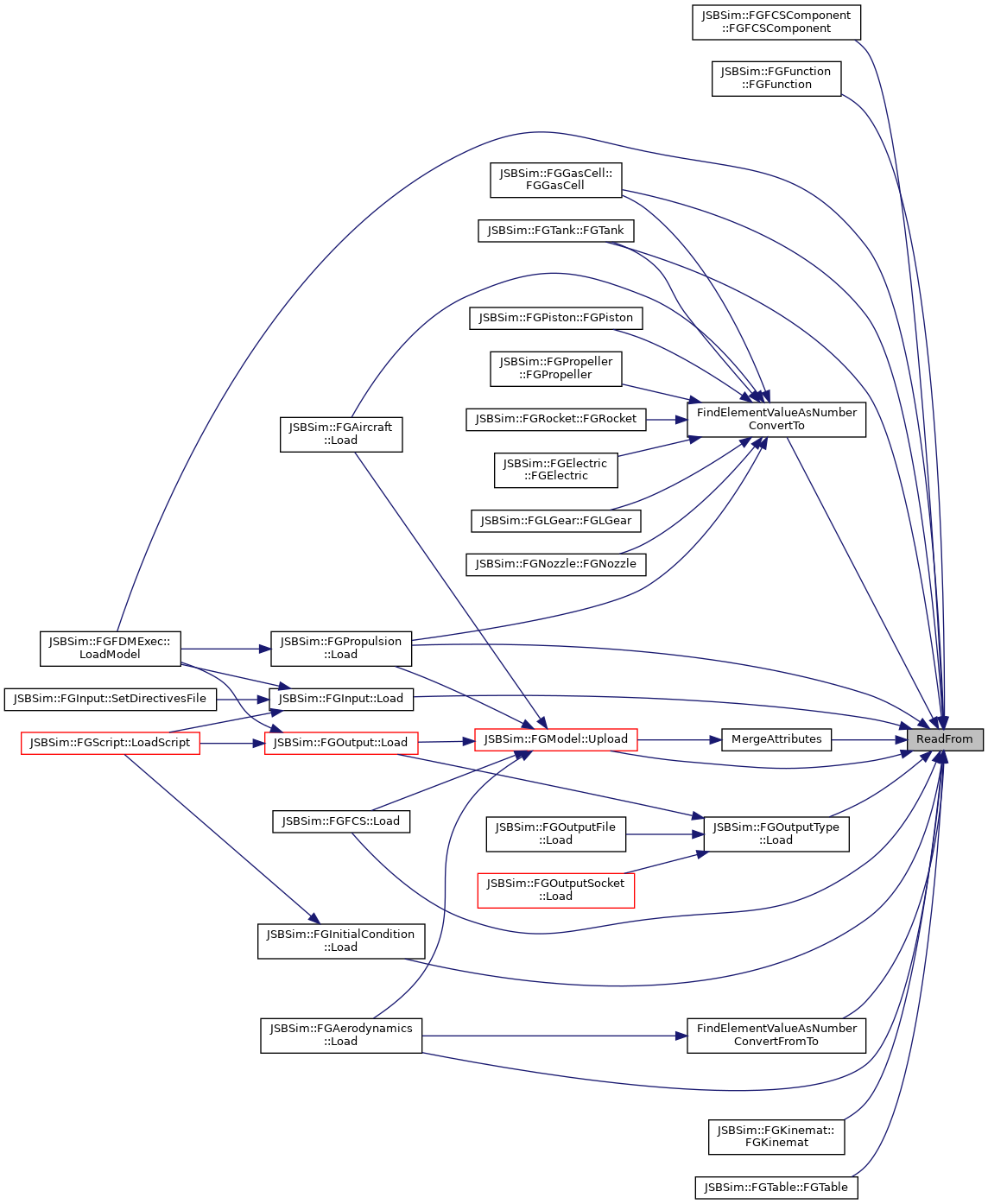
◆ ReadFrom()

string ReadFrom ( void  ) const

Return a string that contains a description of the location where the current XML element was read from.

Returns
a string describing the file name and line number where the element was read.

Definition at line 738 of file FGXMLElement.cpp.

739 {
740  ostringstream message;
741 
742  message << endl
743  << "In file " << GetFileName() << ": line " << GetLineNumber()
744  << endl;
745 
746  return message.str();
747 }
+ Here is the caller graph for this function:

◆ SetAttributeValue()

bool SetAttributeValue ( const std::string &  key,
const std::string &  value 
)

Modifies an attribute.

Parameters
keyspecifies the attribute key to modify the value of.
valuenew key value (as a string).
Returns
false if it did not find any attribute with the requested key, true otherwise.

Definition at line 268 of file FGXMLElement.cpp.

269 {
270  bool ret = HasAttribute(key);
271  if (ret)
272  attributes[key] = value;
273 
274  return ret;
275 }

◆ SetFileName()

void SetFileName ( const std::string &  name)
inline

Set the name of the file in which the element has been read.

Parameters
namefile name

Definition at line 369 of file FGXMLElement.h.

369 { file_name = name; }

◆ SetLineNumber()

void SetLineNumber ( int  line)
inline

Set the line number at which the element has been read.

Parameters
lineline number.

Definition at line 364 of file FGXMLElement.h.

364 { line_number = line; }

◆ SetParent()

void SetParent ( Element p)
inline

This function sets the value of the parent class attribute to the supplied Element pointer.

Parameters
ppointer to the parent Element.

Definition at line 341 of file FGXMLElement.h.

341 {parent = p;}
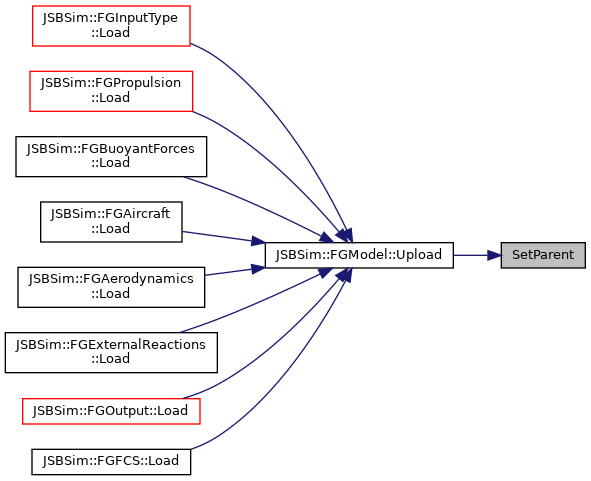
+ Here is the caller graph for this function:

The documentation for this class was generated from the following files:
JSBSim::Element::GetFileName
const std::string & GetFileName(void) const
Returns the name of the file in which the element has been read.
Definition: FGXMLElement.h:235
JSBSim::Element::HasAttribute
bool HasAttribute(const std::string &key)
Determines if an element has the supplied attribute.
Definition: FGXMLElement.h:155
JSBSim::Element::GetAttributeValue
std::string GetAttributeValue(const std::string &key)
Retrieves an attribute.
Definition: FGXMLElement.cpp:260
JSBSim::Element::FindElement
Element * FindElement(const std::string &el="")
Searches for a specified element.
Definition: FGXMLElement.cpp:389
JSBSim::Element::GetLineNumber
int GetLineNumber(void) const
Returns the line number at which the element has been defined.
Definition: FGXMLElement.h:230
JSBSim::Element::GetName
const std::string & GetName(void) const
Retrieves the element name.
Definition: FGXMLElement.h:179
JSBSim::Element::Element
Element(const std::string &nm)
Constructor.
Definition: FGXMLElement.cpp:51
JSBSim::Element::ReadFrom
std::string ReadFrom(void) const
Return a string that contains a description of the location where the current XML element was read fr...
Definition: FGXMLElement.cpp:738